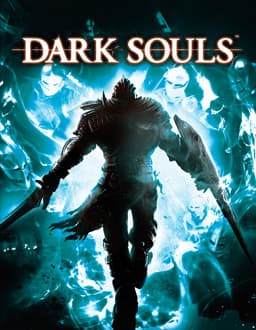
Dark Souls
| Year | 2011 |
|---|---|
| Release platform | PlayStation 3 |
| Genres | RPG |
| Developer | FromSoftware |
| Country | Japan |
| Era | Today, 2010 to 2026 |
| Importance |
Why it matters
Dark Souls continues the design of Demon's Souls but assembles its world differently: Lordran isn't broken into separate stages but linked into one space. A descent from the fortress leads out to a place already seen, a ladder opens a shortcut back, and the map gradually closes in on itself. You have to find your way by memory; there are no markers on the terrain.
The bonfire serves as a save point, refills the flask and at the same time brings back all the defeated enemies, so every rest restarts a stretch of the path. Souls work as both currency and experience: death leaves them where you died, and you get one attempt to recover them. Combat is fought with an eye on stamina, which is spent by attacks, blocks and rolls alike. The story is almost never spoken aloud; events are reconstructed from item descriptions. Players see each other indirectly, through messages left on the ground, ghostly silhouettes and traces of other people's deaths, and this indirect contact replaces ordinary co-op.
Watch it played
Facts
- Lordran is assembled as a single space in which shortcuts loop back to places already visited.
- Bonfires serve as save points and bring back enemies already defeated.
- Death leaves the accumulated souls where you died, and you have one attempt to get them back.
- Players leave each other messages on the ground and see the silhouettes of other people's deaths.
- The story is told mostly through item descriptions, not cutscenes.