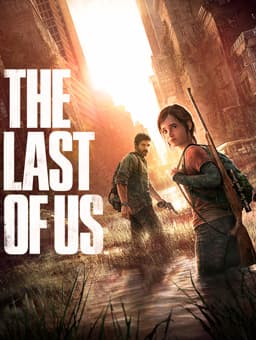
The Last of Us
| Year | 2013 |
|---|---|
| Release platform | PlayStation 3 |
| Genres | adventure |
| Developer | Naughty Dog |
| Country | USA |
| Era | Today, 2010 to 2026 |
| Importance |
Why it matters
The Last of Us came out in the last year of the PlayStation 3's life and is put together as a summary of what console storytelling had learned over a generation. It's a road story about two people, laid out in chapters and built linearly, where fights alternate with long stretches of travel. Here the travel is a scene too: while the characters climb, row and open doors, they talk, and almost everything known about them is said in these in-between passages.
The combat rules work toward the same end. Ammunition is scarce, health kits and gear are crafted from rags and alcohol, and the crafting happens in real time and stops nothing around you, so healing in the middle of a fight is dangerous. The infected differ in how they work: some see you and run at you, others are blind, move by hearing and kill with a single grab. A separate decision by the authors concerns the companion: enemies don't notice her until the player is discovered, and this is a deliberate cheat without which the escort would have broken every quiet scene. The ending offers no fork. The resolution isn't chosen, it's played through, and the whole story rests on that calculation.
Watch it played
Facts
- The game came out in the last year of the PlayStation 3's life.
- Crafting happens in real time and doesn't stop what's going on around you.
- The infected differ: some see the player, some navigate by hearing alone.
- The companion stays unnoticed by enemies until the player is discovered.
- The resolution is set by the authors; the player isn't given a choice at the end.