Ms. Pac-Man
| Year | 1982 |
|---|---|
| Release platform | Arcade |
| Genres | arcade |
| Developer | General Computer Corporation |
| Country | USA |
| Era | Arcades, 1958 to 1983 |
| Importance |
Why it matters
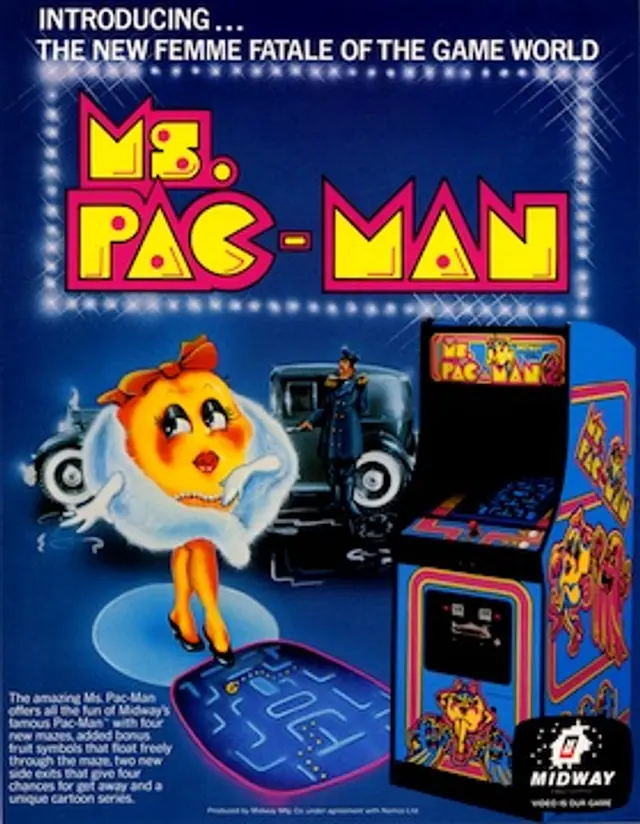
Ms. Pac-Man keeps Pac-Man's clear goal: eat the dots and avoid the ghosts. But it places the familiar action in changing conditions. Four mazes replace a single layout, bonus fruit travels through the corridors, and the pursuers' behavior is harder to reduce to one memorized route. You must watch the current situation even when you know the map well.
The choice between safety and extra points is especially visible. Moving fruit invites you to leave your planned path. A large power pellet temporarily makes ghosts into prey, but you still have to reach it at the right moment. The existing actions produce new decisions: depth grows through the position and behavior of objects rather than the number of buttons.
The project grew from Crazy Otto, a set of modifications to Pac-Man made by General Computer Corporation. Collaboration with Midway turned it into a separate arcade game released in 1982. Its history shows how carefully rethinking a working system can become the basis of a distinct game with its own character.
Facts
- The game has four maze layouts.
- Bonus fruit moves through the corridors.
- General Computer Corporation called its prototype Crazy Otto.
- Power pellets temporarily let you eat ghosts.