PaRappa the Rapper
| Year | 1996 |
|---|---|
| Release platform | PlayStation |
| Genres | rhythm |
| Developer | NanaOn-Sha |
| Country | Japan |
| Era | Disc and 3D, 1995 to 2000 |
| Importance |
Why it matters
PaRappa the Rapper turns controller buttons into lines of a musical conversation. A teacher performs a line, symbols show the button sequence, and the player answers in the required rhythm. The screen may show a karate lesson or driving practice, but performing the song remains the main activity. Words explain the situation, establish the musical pattern and advance the shy hero's story at the same time. Mistakes are audible in the performance, so feedback arrives through both images and sound.
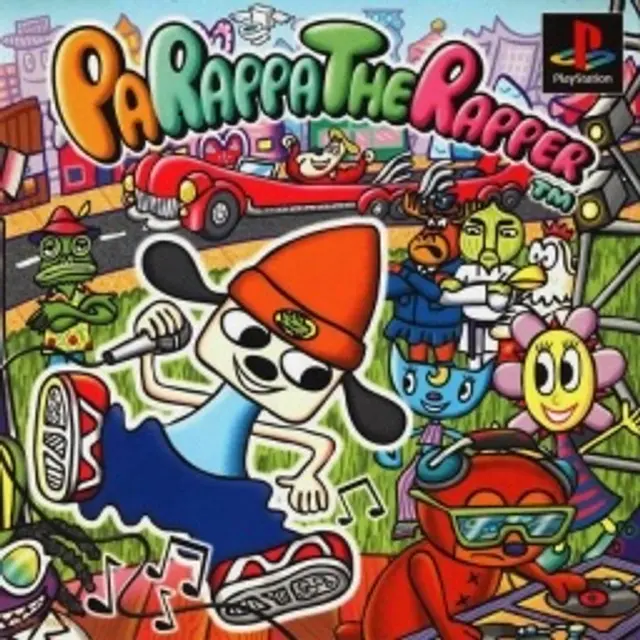
Musician Masaya Matsuura and artist Rodney Greenblat combined this rhythmic task with a world of flat characters inside three-dimensional scenery. Their paper appearance makes the action resemble a moving illustration. Once you master the pattern, the game allows rhythmic variations and evaluates improvisation. You gradually move from repeating someone else's part to performing your own. For the encyclopedia, this is an important way to broaden the idea of gaming skill: instead of aiming or planning routes, you practise listening, timing and confidence in how you answer the music.
Facts
- A teacher performs a line, and the player answers with rhythmic button presses.
- Masaya Matsuura developed the music and game concept; Rodney Greenblat created the characters.
- Flat characters are placed in three-dimensional surroundings.