Street Fighter II
| Year | 1991 |
|---|---|
| Release platform | Arcade |
| Genres | fighting |
| Developer | Capcom |
| Country | Japan |
| Era | Sixteen bit, 1989 to 1995 |
| Importance |
Why it matters
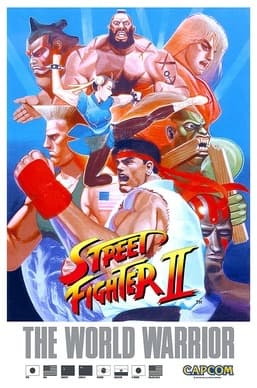
Capcom put eight fighters with different ranges, speeds and move sets into one machine and made a match between two people the main mode. Six buttons divide the attacks into light, medium and heavy, separately for punches and kicks, so each character ends up with several dozen meaningfully different actions. Special moves are entered with a joystick motion and a button: they are performed by hand, and the execution barrier became part of the competition.
Inside the system something the designers hadn't planned turned up: while the opponent reels from a hit, the next attack is guaranteed to land. That is how combos appeared, and a whole culture of analysis grew up around them. The arcade machine stopped being a place where you pay for an attempt to get farther and became a place where you pay for the right to play against a person. Coins laid on the cabinet's panel turned into the way to claim the next challenge.
Watch it played
Facts
- Eight fighters are available at the start; the four opponents from the final section remain unplayable.
- The controls are spread across six buttons: three punches and three kicks of different strength and speed.
- Combos were not planned in advance; they follow from the time the opponent spends reeling from a hit.
- Special moves are entered with joystick motions, not chosen from a list.
- The 1992 Champion Edition unlocked the four bosses and matches between identical characters.