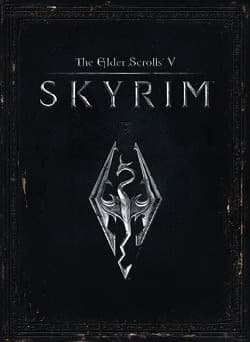
The Elder Scrolls V: Skyrim
| Year | 2011 |
|---|---|
| Release platform | PC |
| Genres | RPG |
| Developer | Bethesda Game Studios |
| Country | USA |
| Era | Today, 2010 to 2026 |
| Importance |
Why it matters
Skyrim takes the choice of class off the player. There are many skills, and each grows through use: whoever sneaks raises Sneak, whoever stands at the forge raises Smithing. A role isn't assigned in advance; it emerges from what the player has been doing, and at each new level a perk is chosen in the tree of the relevant skill. The world is open from the very start and the dungeons aren't locked behind a level threshold, so you can go anywhere almost right away.
Some of the errands are issued by a system that plugs an unvisited point on the map and a suitable client into a template, so the quests never run out. Dragon shouts are assembled from words on walls and are brought to life with the souls of slain dragons, meaning the hero's development isn't governed by level alone. The longest-lasting consequence lies outside the game itself: Bethesda released its editor, the same one used to make Skyrim, and opened it to anyone who wanted it: since then players have been fixing bugs, translating the text, changing the look of the world, adding weapons, whole regions and rules that weren't in the original. Re-releases have come out more than once and on different devices, but it's this accumulated layer that keeps the game alive.
Watch it played
Facts
- Skills grow through use; the character's class isn't chosen in advance.
- Some quests are assembled from a template and point to places not yet visited.
- Dragon shouts are made up of words on walls and require the souls of slain dragons.
- Bethesda opened up to players the same editor that was used to make the game itself.
- The game has been re-released more than once and on devices of several generations.