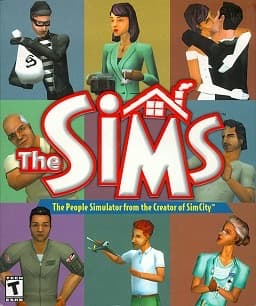
The Sims
| Year | 2000 |
|---|---|
| Release platform | PC |
| Genres | simulation |
| Developer | Maxis |
| Country | USA |
| Era | The 2000s, 2000 to 2009 |
| Importance |
Why it matters
The Sims grew out of work on an architecture simulator: the idea was that the player builds a house and the residents rate how comfortable it is. The residents turned out to be more interesting than the house. The result was a simulation of everyday life with no victory condition: a character has hunger, fatigue, hygiene and a need for company, and the whole daily routine is made up of attempts to keep those gauges within normal range.
The technical decision that everything rests on is moved out of the character and into the furnishings. The fridge itself tells whoever walks up that food can be taken from it, and the bed tells them that it's for sleeping. The character holds no knowledge of the world; it queries the objects around it. Thanks to this, expansions added new actions without rewriting the residents' behavior. The lines are spoken in an invented language, Simlish, so translation doesn't touch them, and the intonation comes through without words. The audience turned out wider than usual: people who had never played games before sat down to The Sims, and the layout of the house occupied them as much as the fate of the family.
Watch it played
Facts
- The idea grew out of an architecture simulator in which residents would rate how comfortable a building was.
- The characters speak an invented language, Simlish, so the lines aren't translated.
- The available actions are described not in the character but in the furnishings themselves.
- There is no victory condition: a session goes on until the player ends it.
- Several expansion packs came out for the first game, each adding a separate layer of everyday life.