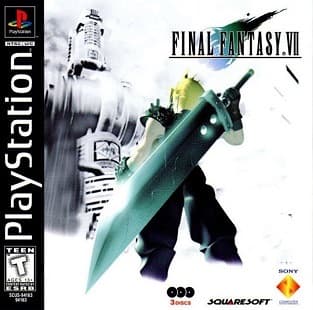
Final Fantasy VII
| Year | 1997 |
|---|---|
| Release platform | PlayStation |
| Genres | RPG |
| Developer | Square |
| Country | Japan |
| Era | Disc and 3D, 1995 to 2000 |
| Importance |
Why it matters
Square moved the series from cartridge to CD and got room for what hadn't fit before: long staged scenes, dozens of locations, video sequences. The image is built from two layers: the background is drawn in advance and doesn't change, and the characters are rendered in polygons and walk on top of it. The technique made it possible to show a city with mismatched scales and angles while staying within the console's limits. Materia, which is slotted into weapons and armor, detached abilities from characters: a spell belongs to the stone, so the party is assembled for the task at hand. Combat runs on an active time gauge, and pausing to choose a command costs you tempo.
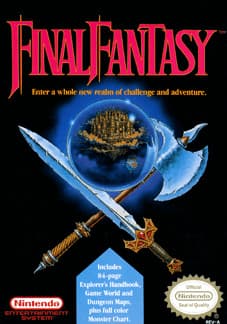
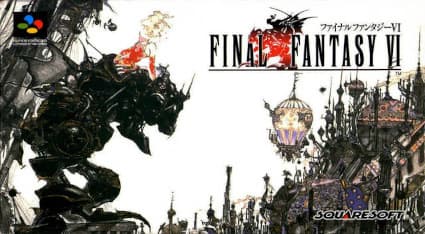
The very fact of its release meant more than any mechanic. A major Japanese RPG series left Nintendo's consoles for Sony, took up three discs and was promoted in Western markets as a big event. After that the genre stopped being considered niche outside Japan.
Watch it played
Facts
- Backgrounds are drawn in advance and don't change; characters are rendered in polygons on top of them.
- The release takes up three CDs.
- Abilities and spells are held in materia, which is slotted into weapons and armor.
- Combat runs on an active time gauge: a character's turn comes when their gauge fills up.
- The series moved from Nintendo's consoles to Sony for the capacity of the CD.