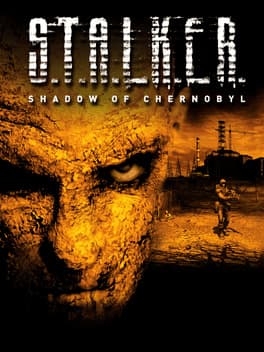
S.T.A.L.K.E.R.: Shadow of Chernobyl
| Year | 2007 |
|---|---|
| Release platform | PC |
| Genres | shooter, RPG |
| Developer | GSC Game World |
| Country | Ukraine |
| Era | The 2000s, 2000 to 2009 |
| Importance |
Why it matters
S.T.A.L.K.E.R. builds its game space on real geography: the Zone reproduces the terrain around the Chernobyl nuclear power plant, including Pripyat and the plant's buildings. The literary frame is taken from the Strugatsky brothers' Roadside Picnic and Tarkovsky's film: anomalies operate in the Zone, artifacts are extracted from anomalies, and the price of an artifact is measured by the risk of approaching it.
The studio wrote its own engine, X-Ray, and with it the A-Life system. The Zone's inhabitants, factions and mutants, move across the maps, clash with each other and take up positions regardless of whether the player is watching them or not. So the same place looks different on a repeat visit. Equipment wears out, ammunition is counted round by round, weapons pull to the side, and a direct confrontation almost always costs more than going around. Development dragged on for several years, some of the announced features didn't survive to release, and traces of the cuts are visible in the finished game. The world nonetheless stayed unfriendly by its very design.
Watch it played
Facts
- The Zone reproduces the terrain around the Chernobyl nuclear power plant, including Pripyat.
- The title and motifs refer to the Strugatsky brothers' novel and Tarkovsky's film.
- The game runs on the studio's own engine, X-Ray.
- The A-Life system moves the Zone's inhabitants and pits them against each other without the player's involvement.
- Development took several years, and some of the announced features didn't make it into the release.