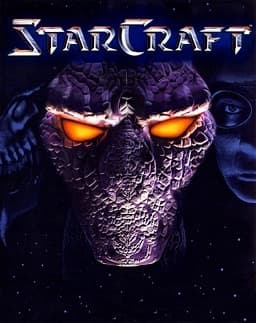
StarCraft
| Year | 1998 |
|---|---|
| Release platform | PC |
| Genres | strategy |
| Developer | Blizzard Entertainment |
| Country | USA |
| Era | Disc and 3D, 1995 to 2000 |
| Importance |
Why it matters
Blizzard built its strategy game on three sides that have almost nothing in common except the rules for winning. The Terrans build structures with a worker who stays put for the whole construction, repair their vehicles and can lift their buildings into the air. The Zerg grow everything from larvae at a single building and spread across the map as creep, without which they can't build. The Protoss place a frame and walk away, the building finishes itself but is powered by a pylon's field. From these differences follow a different economy, a different pace and different mistakes.
The balance between asymmetric sides rests on the fact that every answer has a price. The three-part campaign tells one story, switching the point of view in turn. The built-in Battle.net service brought opponents together without exchanging addresses, and in South Korea StarCraft matches made it onto television broadcasts and into professional leagues.
Watch it played
Facts
- The three sides differ in how they produce: the Terrans build with a worker, the Zerg grow units from larvae, the Protoss warp in a building and walk away.
- The Zerg can build only on creep, which spreads out from their structures.
- Protoss buildings, apart from the nexus, the assimilator and the pylon itself, work only within a pylon's field.
- The campaign consists of three parts, one for each side.
- In South Korea StarCraft matches made it onto television broadcasts and into professional leagues.