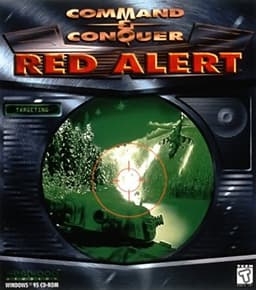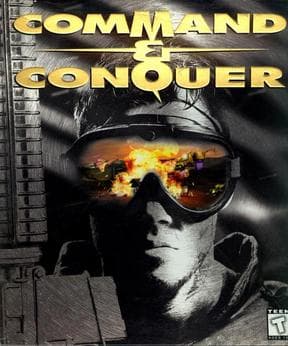
Command & Conquer
| Year | 1995 |
|---|---|
| Release platform | PC |
| Genres | strategy |
| Developer | Westwood Studios |
| Country | USA |
| Era | Sixteen bit, 1989 to 1995 |
| Importance |
Why it matters
Westwood took on the genre a second time and worked mostly on the interface. What was done one unit at a time in Dune II is done here with a drag box: a group is selected, the group is given a shared order, and the assembled squad is bound to a number key on the keyboard. Construction moved into a sidebar with icons and a queue, so the base keeps growing while the player's attention is on the fighting. The economy stayed built around a single resource: harvesters collect tiberium, haul it to the refinery, the refinery gives credits, and the credits go back into structures and troops.
A match was designed to be played against a person over a modem or a network, and this is where the history of strategy games as a competitive pursuit begins, where not only the plan counts but also how fast your hands carry it out. The two sides differ in more than looks: each has its own set of vehicles and its own way of fighting, and the next mission is chosen on a world map. Between missions there are video sequences with live actors, shot as news reports and mission briefings, and in the mid-nineties this was a common way to tie missions into one story.
Watch it played
Facts
- Units are selected with a drag box, and the assembled group is bound to a number key on the keyboard.
- Construction is in a sidebar with icons and a queue, so the base grows during combat.
- The economy is built around tiberium: harvesters haul it to the refinery, where it turns into credits.
- The two sides differ in their set of vehicles, not just in looks.
- A match can be played against a person over a modem or a local network.