Wolfenstein 3D
| Year | 1992 |
|---|---|
| Release platform | PC |
| Genres | shooter |
| Developer | id Software |
| Country | USA |
| Era | Sixteen bit, 1989 to 1995 |
| Importance |
Why it matters
The id Software engine draws vertical strips. The level is defined as a flat grid of cells, the walls stand strictly along its lines, all of the same height, and the floor and ceiling are filled with a flat color. So a frame is built simply: the program casts one ray for every column of the screen and finds out which wall it reached. The engine pays for this simplicity with prohibitions. There are no sloped walls, no rooms one above another, you can't look up or down, and enemies and objects are drawn as flat pictures turned toward the player.
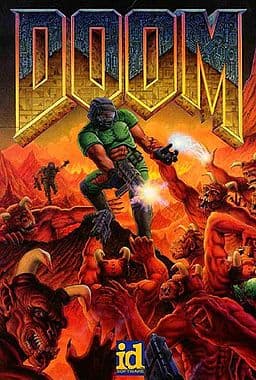
The game was sold in an unusual way. The first episode was given away free and allowed to be copied, the rest were mailed out after payment, so the game spread on floppy disks and modem bulletin boards, bypassing the shops. Meanwhile it kept traces of the arcades that the genre would soon lose: points, collectible treasure, a stock of lives and a tally of percentages at the end of a level. A year later, in DOOM, made by the same people, almost none of this is left, and you can see what the shooter decided to count as excess.
Watch it played
Facts
- The level is defined as a flat grid, all walls are the same height and stand along its lines.
- A frame is built with one ray per screen column, so rooms can't sit one above another.
- You can't look up or down, and enemies are drawn as flat pictures.
- The first episode was distributed freely, the rest were mailed out after payment.
- The game has points, treasure and a stock of lives left over from arcade machines.