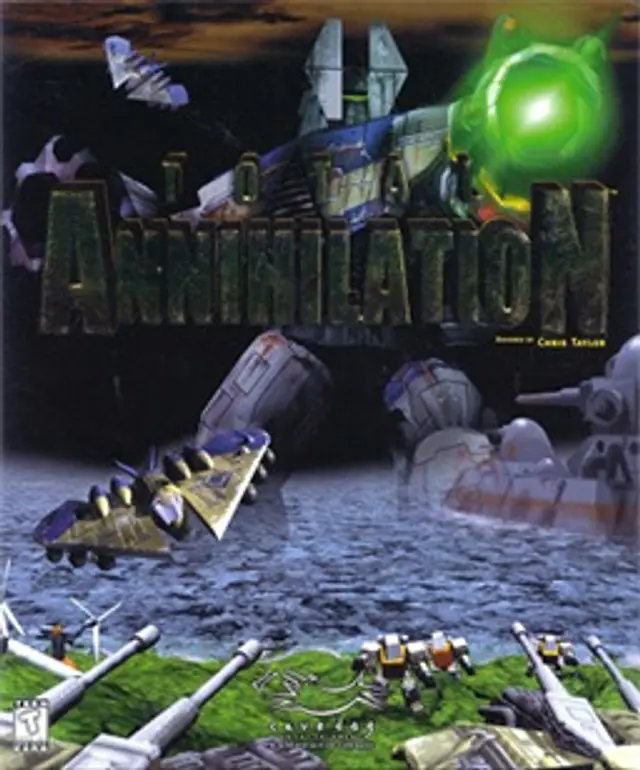
Total Annihilation
| Year | 1997 |
|---|---|
| Release platform | PC |
| Genres | strategy |
| Developer | Cavedog Entertainment |
| Country | USA |
| Era | Disc and 3D, 1995 to 2000 |
| Importance |
Why it matters
In Total Annihilation, an army begins with a commander who can build and fight. The task then grows into an industrial system of metal extraction, energy production and military manufacturing. Resources arrive continuously and are spent as construction progresses. The balance between income and spending therefore matters alongside stored reserves: several simultaneous building projects can slow one another down. Queued orders let you prepare a sequence of actions and shift attention to another part of the front.
Different machines operate on land, in the air and at sea. Terrain and projectile trajectories make positioning a practical concern: useful high ground or an obstacle changes the outcome of shelling. Destroyed machinery can be reclaimed for metal, giving a recent battlefield economic value. The game connects production and combat in a single chain, where losing territory also means losing future resources. In strategy history, it provides a clear example of war as the operation of an entire system that the player continually expands, repairs and adjusts.
Facts
- Metal and energy arrive and are spent continuously.
- The commander combines construction with combat abilities.
- Wrecks of destroyed machines can be reclaimed for metal.