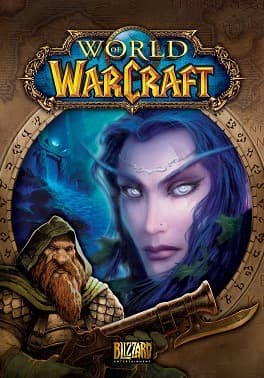
World of Warcraft
| Year | 2004 |
|---|---|
| Release platform | PC |
| Genres | RPG |
| Developer | Blizzard Entertainment |
| Country | USA |
| Era | The 2000s, 2000 to 2009 |
| Importance |
Why it matters
World of Warcraft moved the universe of Blizzard's strategy games into a persistent world with a monthly subscription. The barrier to entry here is lowered on purpose. By 2004, online RPGs punished death with the loss of experience and items and required a group for almost any action. Here death sends the character back to its body and damages the equipment, and most of the levels are played through alone.
The world is laid out in copies. Each server holds its own version of the continents with its own population, and dungeons are moved into isolated instances that only the assembled group enters: the queue for the enemy you need disappears. Quests are handed out as a list and lead the player across the map from camp to camp; most RPGs later adopted this kind of quest log. The cooperative part is pushed up to the top, into raids of several dozen people, where scheduling the gatherings already requires outside organization: guilds, role assignment and voice chat.
Watch it played
Facts
- The world is divided into servers, each with its own copy of the continents and its own population.
- Dungeons are moved into isolated copies that only the assembled group enters.
- Death doesn't take away experience: the character returns to its body and repairs the equipment.
- A significant part of the levels can be played through alone.
- Access was built on a monthly subscription from the very start.